Everywhere you look, there’s a message that says, “Help is out there.”
Need money? There’s a program. Need food? There’s a resource. Struggling with bills, rent, childcare, mental health, trauma? There’s a brochure, a hotline, a website, a “we’re here for you” slogan.
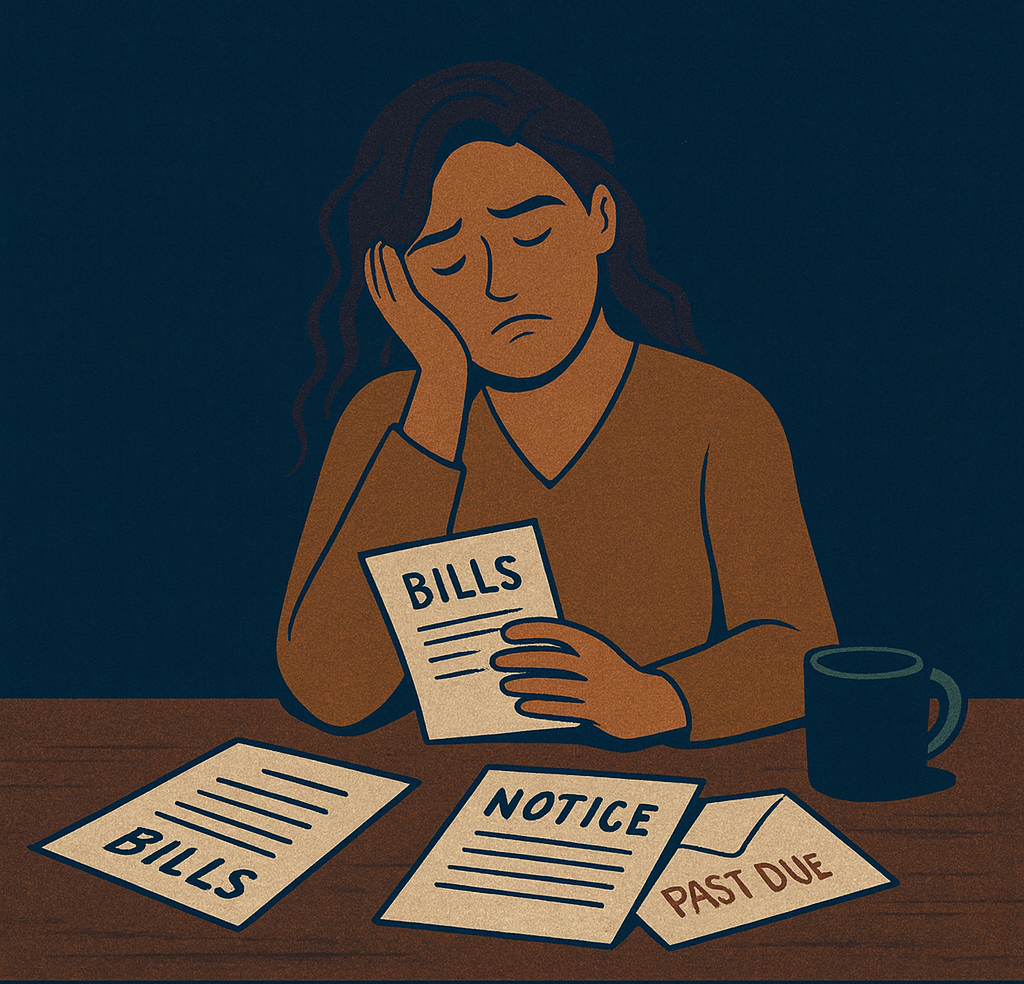
But when you’re really down bad—lights about to be cut off, fridge empty, eviction notice on the door—it suddenly feels like the whole world is built to tell you:
“We’re so sorry you’re struggling. Have you tried… fixing your credit?”
“There’s Help Available!” (Until You Actually Try to Get It)
When you’re desperate, the first thing you hear is a list of “options”:
– Government programs for rent assistance
– Food stamps / SNAP
– Emergency loans
– Charities and community programs
– Credit counseling and “financial wellness” services
It all sounds good from the outside. But once you start clicking links and making calls, the story changes:
– “The program is closed.”
– “Funds ran out.”
– “You make slightly too much to qualify.”
– “We can help you with a budgeting workshop.”
– “We can’t help with past-due balances, only future planning.”
Meanwhile, the power company doesn’t care about your budget plan. The landlord doesn’t want to hear about your credit counseling. The kids still need to eat.
They Talk About Credit While You’re Trying Not to Starve
So many “solutions” are built around long-term financial health, which is important—but that doesn’t keep you alive in an emergency.
You’re sitting there saying:
“I don’t need a webinar on how to raise my credit score in 6 months. I need $150 today so my lights don’t get cut off and my food doesn’t rot in the fridge.”
Let’s be real:
– A credit coach won’t stop a shut-off notice.
– A YouTube video on “money mindset” won’t put groceries in your cart.
– A financial literacy workbook can’t pay rent.
The Numbers Don’t Match the Fairy Tale
We’re told we live in one of the “richest countries in the world,” but look at what people are actually living through:
- According to multiple surveys, about half of Americans can’t afford a $1,000 emergency without going into debt or borrowing from someone.
- Millions of people are working full-time and still relying on food stamps, food banks, or payday loans just to get by.
- Rent, groceries, gas, and utilities climb while wages stay flat—and then people are told it’s their “financial choices” that are the problem.
The message is loud and clear: “The system is fine. You’re the one that needs to be fixed.”
Programs That Look Good on Paper… and That’s About It
Here’s what people are actually running into:
Endless paperwork. You need pay stubs, bank statements, lease agreements, IDs, past-due notices, letters from your landlord, and sometimes things you don’t even have access to in crisis.
Wait lists and “call back next month.” By the time a caseworker calls you back, you might already be evicted or disconnected.
Income “limits” that don’t reflect reality. You can make just a little “too much” to qualify, but not enough to survive. You’re too broke to live comfortably and too “rich” for help.
Charities with limited funds. They do what they can, but the line is too long, and the money runs out fast. You can call ten places and still end the day with nothing but “I’m sorry.”
Loans, Loans, Loans – But No Lifeline
When you search online for “help paying bills,” what do you get?
– Credit repair companies
– “Bad credit? No problem!” loan ads
– Buy Now, Pay Later offers
– Debt consolidation services
The answer is rarely: “Here’s some actual, no-strings-attached help.”
It’s almost always: “Here, borrow more money, pay more interest, and stay in the cycle.”
And if you say no to that? You’re on your own.
“You Should’ve Planned Better” (But With What?)
People love to say, “You should’ve saved an emergency fund,” like that’s easy in a world where:
– Rent can be half your paycheck or more
– Groceries cost more every week
– Childcare is a second rent
– Medical bills hit out of nowhere
– Gas, utilities, and fees keep climbing
You can’t “budget” your way out of a system that’s built on making sure you’re always one crisis away from losing everything.

Photo credit: stock image / Canva
The Emotional Toll of Being Told “There’s Help” When There Isn’t
It does something to you. You start to feel like:
– Maybe I’m the problem.
– Maybe I’m just bad with money.
– Maybe I’m lazy, ungrateful, or not trying hard enough.
But deep down, you know the truth: you’ve worked, you’ve tried, you’ve hustled, you’ve done your best. And still, when the bottom falls out, there is no soft place to land. Just more lectures, more judgment, more “resources” that don’t actually resource anything.
So… Is There Really “No Help Anywhere”?
There are programs and people out there trying. There are mutual aid groups, community fridges, small nonprofits, church pantries, neighbors helping neighbors. But the truth is:
The world is not structured to keep regular people safe. It’s structured to keep the machine running—bills paid, debts collected, profits flowing—while the actual humans under all that weight are told to “be more responsible.”
When you fall, you don’t land on a safety net. You land on more paperwork, more hoops, more shame. And in between all that, you’re just trying to survive another day.
What Do We Do With That Truth?
I don’t have a neat little bow to tie this up with. I’m not going to lie and say, “But if you just stay positive, everything works out.” Because sometimes it doesn’t. Sometimes it’s brutally hard and unfair.
But I will say this:
– You’re not crazy for feeling like the system is not built for you.
– You’re not lazy or broken for needing help.
– You’re not alone in feeling abandoned by all the “support” that evaporates when you actually reach for it.
And maybe the real “help” isn’t in the glossy brochures or government talking points—but in us telling the truth, finding each other, and building small, real ways to support one another when the world looks the other way.
Because if there’s one thing this world has taught us, it’s that the system isn’t coming to save us. So we look out for each other, or we get swallowed whole.